
Why Your Living Room Never Feels Finished (6 Design Mistakes to Fix)
- Mar 5
- 5 min read
A quick note on transparency. Some links in this post are affiliate links, which means I may earn a small commission if you purchase through them. I only recommend products that align with my values and that I would suggest even without an affiliate relationship.
We've all been there. You bought the sofa, hung the curtains, added the throw pillows you saw on Instagram. But when you sit down at the end of the day, the room still feels… off. Like a waiting room. Like it belongs to someone else.
When a room refuses to come together, our first instinct is to buy more. Another side table. Different art. More decor to fill the gaps.
Let me be straight with you: buying more is almost never the answer. The reason your living room never feels finished usually comes down to a handful of invisible living room design mistakes that throw off the balance of the whole room — and one big thing most design blogs never talk about.
Let's diagnose what's actually happening — and fix it smartly.
1. The Matchy-Matchy Trap
Decision fatigue is real. When you're furnishing a room, it feels safer to buy the matching sofa, armchair, and coffee table set. If they coordinate perfectly, it'll look put together, right?

Actually, no. A perfectly matched furniture set is one of the fastest ways to make a room feel dull and lifeless. When everything is uniform, there's no tension, no contrast — the room feels like it's waiting for something to happen.

The fix: Mix eras, shapes, and finishes. If you already own a matching set, break it up. Move the matching armchair to a bedroom and bring in a chair with a different profile or finish. Your living room should tell the story of your life over time — not a single trip to the furniture store.

→ A chair like this one from Amazon can instantly break up a matched set without a full room overhaul.
2. The Neutral Color Mistake Killing Your Living Room

Choosing colors is intimidating. What if they clash? What if it looks wrong? So we default to safe: beige sofa, gray rug, white walls.
Here's what happens: without contrast, a room feels sterile. We keep adding more neutral decor trying to fix it, but what the room is actually starving for is complexity. Color isn't just decoration — it directly influences your nervous system and your emotional state in a space. The right colors add depth and feeling. The wrong ones (or the absence of them) leave you flat.

The fix: You don't need to paint your walls neon pink. If you love neutrals, layer your textures aggressively — rough woven rug against smooth leather, matte ceramics with glossy accents. And consider introducing one natural color: a pale blue, a warm sage, a terracotta. These tones add visual complexity AND actively calm your nervous system. That's not a coincidence — it's design working the way it should.
→ Not sure which colors will actually work for your nervous system? That's exactly what a Color Discovery Session helps you figure out.
3. The Furniture Mistake That Makes Small Living Rooms Feel Cheap
One of the fastest ways to make a room feel cheap and unfinished is proportion — specifically, buying items one size too small to save money.

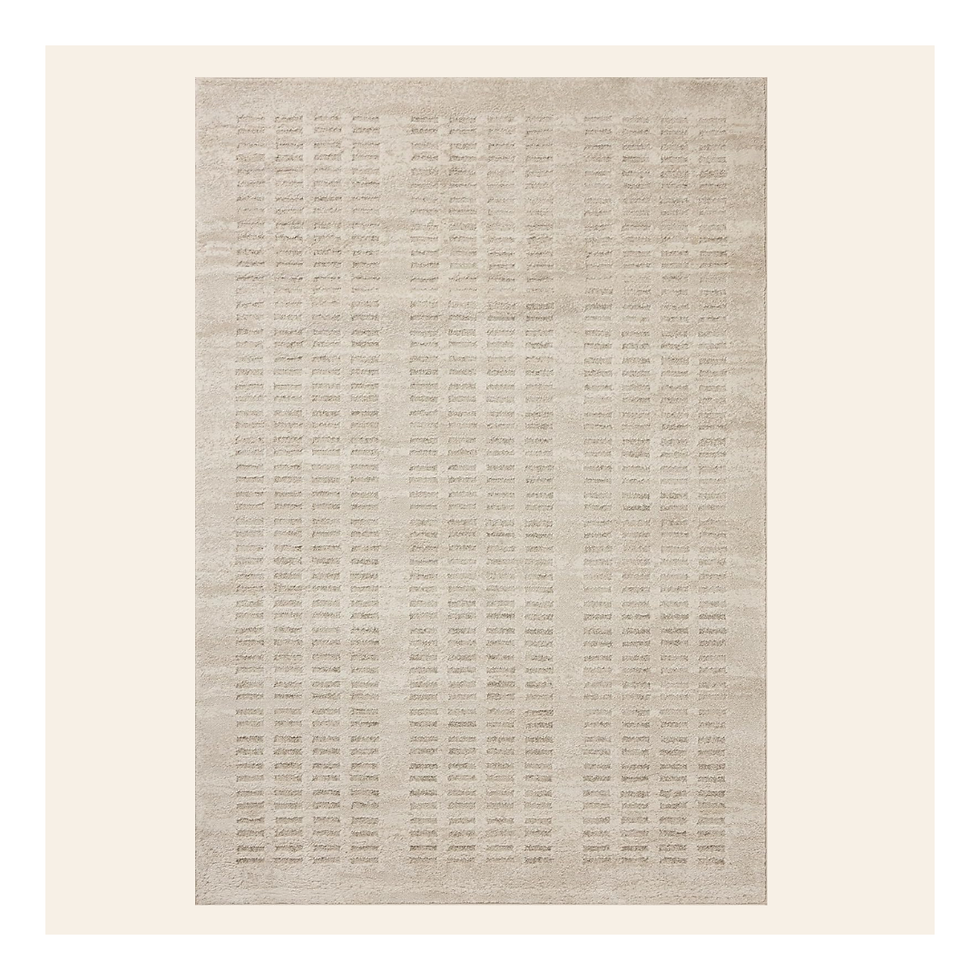
The biggest culprit? The rug.
A rug that's too small floats awkwardly in the middle of the space. Your furniture looks like it's drifting apart. And then we push everything flat against the walls trying to compensate, which makes the whole room feel smaller and colder.
The fix: Size up your rug. In my experience, this single change is often the most impactful thing you can do in a living room. At minimum, the front two feet of your sofa and chairs should rest on the rug. Then pull your furniture at least 10cm away from the walls. Counterintuitive in small spaces, but it creates zones, warmth, and the illusion of more room — not less.
4. The Big Light Problem
We need to talk about the Big Light.
Most living rooms come with ceiling lights or spotlights. They're functional, yes. But relying on them exclusively after dark is why your living room feels like a hospital waiting room.
Overhead lighting casts hard, directional light that flattens a room and strips it of warmth. Your nervous system registers this — harsh lighting keeps you alert when you're trying to wind down. It's not in your head.
The fix: Layer your lighting. Bring it down to eye level with floor lamps and table lamps to soften and disperse the light. If walking around switching five lamps on every night sounds like a nightmare, smart bulbs solve this completely — one tap and everything comes on at once.


5. Feature Congestion
In our rush to make a space feel finished, we fill every surface with small things. Tiny frames, little plants, collections of knick-knacks. More stuff = more finished, right?
Vision researchers call this "feature congestion." Too many small shapes and edges create visual noise — your brain processes every single item, which increases cognitive load and makes the space feel restless and messy even when it's technically clean. There's nowhere for your eye — or your mind — to rest.
The fix: Trade five small things for one large thing. One oversized piece of art instead of a gallery of tiny frames. Let your shelves breathe — they should work like punctuation in a sentence, not the whole paragraph. And let closed storage do the heavy lifting for everyday clutter. You don't live in a showroom. You're allowed to be messy on the inside.
6. The Treasure You're Hiding in Boxes
Here's the section most design blogs skip entirely — and it might be the most important one.
You probably already own the most interesting things in your living room. They're just not in it.
The ceramic bowl you brought back from Portugal. Your grandmother's brass candlesticks. The woven basket from that market in Morocco. The art print you bought at a local show three years ago and never hung because you weren't sure it would "go."
We hide these things because we're afraid they'll look cluttered, mismatched, or out of place. But here's what's actually true: these objects are the difference between a room that feels finished and a room that feels like a showroom. They're the reason a space feels like you.
The problem isn't the objects. It's that we haven't learned how to showcase them.

The fix: Treat your treasures like a curator, not a collector. Group them intentionally — odd numbers, varying heights, one unifying element (material, color, or origin). Give them breathing room. One beautiful ceramic bowl on an otherwise clear shelf will stop you in your tracks. Five ceramic bowls crowded together will disappear into noise.
The goal isn't to display everything. It's to display the things that mean something, in a way that lets them be seen.
The Bottom Line
A finished living room isn't about perfection or price tags. It's about balance, intention, and spaces that actually feel like yours.
Pull the sofa away from the wall. Turn off the Big Light. Put your grandmother's candlesticks on the shelf.
You don't need to finish your room. You need to let it start telling your real story.




Comments